Showing posts with label lifestyle. Show all posts

Thursday, 13 September 2012

Ripping it bare

Whether you wax, lazer, trim, use burning cream, or shave: most females reading this, remove your pubic hair at least twice a year, if not twice a week. There are so many different ways to exterminate or cultivate all those hairs piercing your smooth skin, but today let us ask why we spend so much time, money and effort doing this? (And on that note, why arm hair? Why leg hair?)

“Body hair is ugly” says little miss normalised. “If you’re going to share, it ought to be bare,” says little miss conventional. But during this article, gag the little misses with scarves made of your own discarded pubic hair, because the removal of hair can be a so very painful and expensive process, we need to examine our reasoning. Indeed, feeling on occasion like paid-for-torture, just so you can be a ‘normal woman’, the wax process, for anyone not familiar goes like this: a woman in a lab coat towers over you, dripping hot (but pink!) wax onto your skin, and as she rips the thick wax from your shuddering body, you cry out from the hideous pain and she cackles. That’s why the lazer, for over a hundred a go, is so popular. Wax is torture, lazer is expensive, shaving and epilating does your skin no good, and cream isn’t precise. It is uncomfortable and expensive and yet we consider it almost a necessity to our lives.

Do all cultures make the same cut? And what is the history of the hairless? Well, there is evidence for it in ancient Indian and Egyptian cultures, especially amongst the upper echelons of society. There are moments of women taking a stand against the excessive hair removal in history too, the habit falling out of fashion after Catherine de Medici, then queen of France, forbade her ladies in waiting to remove their hair any longer from one of the most sensitive places on their body. But the history of waxing, like the history of menstruating is an obscure one, the female body, unless she was a prostitute, was a private body.

Catilin Moran argues that our obsession with making our bodies resemble a pre-puberty time is a pornographic aesthetic. In pornography, they keep it clear so you can see the genitals better, and it has now become a fashionable trend. I would add to this that until the 20th century, the majority of classical western painters seemed to conveniently miss the pubic hair upon their nude women for perhaps a similar reason? While literature never seemed to explicitly mention women’s body hair, not in Shakespeare and certainly no Jane Austen character went off for a wax.
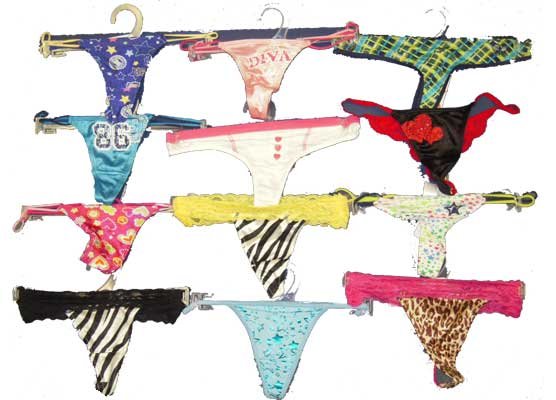
Indeed, it’s as if female body hair and the everyday women removing it, just never quite existed until recently. Although from the way bikinis and lingerie is cut, it seems the existence of pubic hair doesn’t factor in their designs at all. Personally, I wouldn’t be surprised if these companies were in cahoots with the waxing industry, shaking hands over secret deals to make tiny underwear that only looks good if you’re barely there.

There is history behind the idea that hair on the body, signifies an unkempt disinterest in basic bodily grooming like an unattractive heathen, even your own underwear is against you!

This has reminded me of the time I confessed myself a feminist to my thirteen year old classmates. ‘That means you have hairy armpits!’ was the intelligent conclusion they taunted me with that break time. I should have replied “Yeah, so what?” defiantly. But I let them instill a sense of shame in me so that I could fall in line with their hairy politics. Didn’t we all? Hair ultimately symbolises subversive contempt for the public ideal of beauty, showing there is someone who does not let the needed approval of others govern her own body. Like the fall of paradise, we became aware not of our nakedness, but of our hair that needed to be governed.

We will carry this playground shame and continue our efforts until someone makes body hair seem beautiful. But meanwhile I’m asking for baby steps. Do you need to rip it all off? And so often? Can you ever feel comfortable with the fact that there is hair growing on your body? This is my parting gift to you.

By Rosalind Kendal


Monday, 10 September 2012


The Ethics of Fur


Six months ago I asked three students what they knew about ethical fashion.
‘umm,’ they replied, ‘it’s like not using fur isn’t it.’
‘Is that important to you?’ I asked.
‘Yeah, I guess.’
‘How about making sure your clothes aren’t made by slave labour?’ I asked, good naturedly.
And the students were silent. Awkward.
Ultimately, the woman who began PETA, Ingrid Newkirk, is a clever marketing guru as well as an ethically minded individual, who has managed to pull a lot of stunts to get the attention of the press, the worldwide community and students. People really do remember and often adhere to her cause, fur is not as fashionable as it used to be. We probably need someone like her in the ethical fashion community, pulling high profile political stunts directed at the labour behind the label and sustainable materials. For although PETA is impressive, I believe that the no fur campaign has over shadowed the general ethical fashion campaign somewhat. Do people care more about animals than they care about people in poverty when they list no-fur as the main ethical choice in their purchases? And what is the real problem with fur in the first place, especially when it is second hand?

The truth about fur is (unless you’re a vegetarian who does not wear leather) in principle using fur from animals you already eat, is theoretically not a bad thing. It’s actually waste efficient. Of course there are farms that breed animals just for their fur, which can seem cruel, places that treat animals badly which is horrible. But just like the choice between buying a free-range chicken or a battery-farmed chicken, can we make a similar choice when buying fur? Is there a way to buy fur ethically?

There is a website called furisgreen.com which argues “For many trappers and aboriginal communities living far from urban centers, beaver and other wild animals are part of their everyday diet. Whatever they don’t eat is returned to the forest to feed other wildlife. Nothing is wasted.” Which all sounds like a rather lovely eco cycle, if it does indeed take place amongst the fur-coat gathers of the Canadian hemisphere. In any case there must be a way to establish more transparency in the fur industry, so that just like free-range chickens, there can be the option of free-range fur. Just as we must try to establish more transparency in retail generally, fur needs to fall in line.

I spoke with a very good friend of mine (Maxine) who always has a more considered stance than most, about what she thought of fur and buying ethically. She takes a more anti-fur stance, yet does not necessarily have the labour behind the label as a high concern when she is shopping, as many people do not, yet. She offers this:

“I think the problem is that the fur campaign was ultimately far easier to push onto people, because the people it targeted are a smaller group and because it's a luxury item people can live without. A person's basic wardrobe is a necessity. As is their child's school uniform. So the pressure consumers can place on the brand/product isn't the same as there's no affordable alternative. If, however, an affordable alternative did exist, then maybe people could be more choosy about where they shopped. Even something as simple as organising charity shop stock so that it was organised by size could help.”

Luckily House of Beth offers both an organized way of ethical shopping, offering only quality clothes at affordable prices, so an alternative now does exist!

As affordable recycling is key to all modern life, I see no problem with second hand fur. In England we are blessed with icy winters, and a second hand fur coat, is a way to keep warm and glamorous all winter long, like Narnia’s winter queen. Besides which I am on a new bridesmaid mission to find the bride a second hand white fur vintage coat to keep her warm in her wedding dress. So far I have checked charity shops, Ebay and I am soon to go Portebello. Wish me luck. (Any retail suggestions are welcome)

By Rosalind Kendal


Thursday, 12 July 2012


The Head Piece and the Headdress

Friday afternoon, and I am fighting the temptation to leap into the outdoors and perform some sort of pagan sun dance, celebratating the hot sun that we are ephemerally blessed with. If I were to discard the co-ordination of House of Beth’s wardrobe for my blazingly beautiful sun mistress however, I would need a head-piece (as well as rather good excuse to give to Talia.)
Yes, a head-piece or a headdress is a historical necessity for any form of worship. From the tribal to the Pope today, they all don their hair in preparation for celebration and worship with feathers, jewels and gold.
And as we, the secular masses, prepare to celebrate the summer and worship the sun, do we too don ourselves with a head-pieces? Well, I suppose we wear sun-hats, but as glamorous as they can be, they lack a sparkle that speaks to the sunshine, for they are far too practical to be considered true crowns. For the head-piece, the perfect head-piece, should act as pure adornment, for our own personal jubilee.
Recently flower crowns have been a massive festival must, a wave to the flower power of the ’60s and your inner fairy-princess. You can purchase them from £3 to £75, from Spitalfield stalls to tiny vintage boutiques. New in for the festival look, are the Native-American inspired feather warrior crowns, which is a fun alternative to flowers, albeit a heavy one.
If you don’t fancy the ‘Hiawatha meets the 21st century look’, House of Beth has provided you with it’s own range of affordable head-dresses, that differ from both the flower power 60s’ and the feather fun. These headdresses are mirrored with our collection of clothes we are releasing this summer that draw upon the cultural event of the year – the Olympics. To me, Olympics says ancient Greece, rather than panting around in sweats, and as Talia’s all time favourite poet was an ancient Greek poet who sang bravely and magnificently on love, we decided to base our ‘look’ and thus head-pieces this season on Sappho.
Wile Weaving Daughter
Sappho embodies the sensual woman, who is beautiful because she expresses her love and vulnerability, fearlessly. She is renowned poetically by sages, through out the ages, for this. And today we too, pay tribute to her love poetry by our collection’s headdresses that celebrate this poetic beauty. When wearing these headdresses, they will transform an ordinary outfit of a simple white dress and sandals into the Sappho goddess, celebrating your own beauty and worshiping life, love and death. They make you feel at once beautiful and strong, like the ancient Greek poetess herself, with gold and pearls.
On this note, I will put on my own headdress and give my skin to the sunlight so I may cleanse the winter away.
Love
S x
N: B Our Ancient Greece inspired head dresses are made for us by the endlessly talented Justine Silverstone, who takes a few jewels and creates the personality of the woman who inspires our collection. Luckily for you, although they look far from high street, they are high street prices, for House of Beth pledges to always offer high range apparel at mid-range prices.